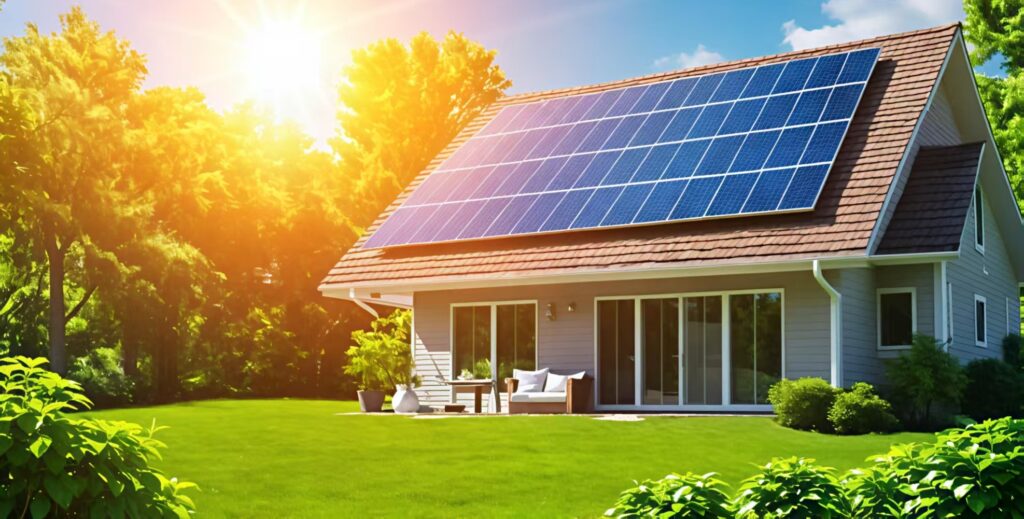
PV + Energy Storage + Microgrid: The Core Combination Model for Building a New Power System
In the context of global energy transition and the goal of carbon neutrality, building a new power system dominated by new energy has become an inevitable trend. As a clean, renewable and widely available energy source, photovoltaic (PV) power generation has become the core pillar of the new power system. However, the inherent intermittency, volatility and randomness of PV power generation have become key bottlenecks restricting its large-scale grid connection and stable operation. Energy storage systems can solve the problem of energy mismatch between PV power generation and load demand, while microgrids, as a small-scale intelligent power generation and distribution system, can realize the integrated management and flexible scheduling of PV, energy storage and loads. The “PV + Energy Storage + Microgrid” combination model integrates the advantages of the three, forms a complementary and synergistic operation mechanism, and has become the core solution for building a safe, efficient, clean and low-carbon new power system. This article will deeply interpret the core value, synergistic mechanism, typical application scenarios and development prospects of this combination model, providing professional reference for practitioners and investors in the new energy industry.
I. The Core Dilemma of New Energy Development: Why Do We Need the “PV + Energy Storage + Microgrid” Combination?
With the rapid expansion of PV installed capacity worldwide, the contradiction between the characteristics of PV power generation and the stability requirements of the power system has become increasingly prominent. The single PV power generation model can no longer meet the needs of the new power system, and the three core dilemmas are as follows:
- Intermittency and Volatility Lead to Grid Instability: PV power generation is highly dependent on weather conditions such as sunlight, and its output power fluctuates sharply with changes in light intensity. For example, sudden changes in weather (such as cloudy days, rain, and snow) will cause a rapid drop in PV output, which will bring great pressure to the power grid, affect the balance of supply and demand of the power system, and even lead to grid fluctuations and blackouts in severe cases.
- Energy Mismatch Between Generation and Load: PV power generation reaches its peak during the day (usually 10:00-16:00), while the peak of social electricity load usually appears in the morning and evening (peak load periods). This mismatch between “peak generation” and “peak load” leads to a large amount of abandoned PV power, which reduces the utilization rate of PV energy and causes waste of renewable energy resources.
- Poor Adaptability to Complex Scenarios: In remote areas, mountainous areas, pastoral areas and other regions with weak or no grid coverage, single PV power generation cannot guarantee stable power supply for residents and industrial and agricultural production; in large industrial parks and commercial centers with high electricity demand, the fluctuation of PV output is likely to affect the normal operation of production equipment and electrical appliances.
The emergence of the “PV + Energy Storage + Microgrid” combination model precisely solves the above dilemmas. It takes PV as the energy source, energy storage as the regulation core, and microgrid as the operation carrier, realizing the intelligent integration and efficient utilization of new energy, and providing a reliable solution for the stable development of the new power system.
II. Synergistic Mechanism: How Do PV, Energy Storage and Microgrid Work Together?
The “PV + Energy Storage + Microgrid” combination is not a simple superposition of three technologies, but a systematic integration with clear division of labor and close collaboration. The three components play their respective roles and form a closed-loop operation system, which can realize the efficient utilization of energy and the stable operation of the power system. The specific synergistic mechanism is as follows:
2.1 PV: The Core Energy Source of the System
PV modules convert solar energy into electrical energy, which is the primary energy input of the entire combination model. Through technologies such as maximum power point tracking (MPPT), PV systems can obtain the maximum power output under different light conditions, providing clean and renewable electrical energy for the microgrid. In practical applications, PV systems can be flexibly configured according to the scenario, such as distributed roof PV in residential areas, ground PV power stations in industrial parks, and large-scale PV arrays in remote areas, to meet the different energy needs of various scenarios.
2.2 Energy Storage: The “Regulator” and “Backup Power” of the System
Energy storage systems (mainly lithium-ion batteries, such as lithium iron phosphate batteries) are the core regulation link of the combination model, responsible for solving the problems of intermittency and energy mismatch of PV power generation. Its core functions are reflected in three aspects:
- Peak Shaving and Valley Filling: When PV output is surplus (such as daytime peak generation), the energy storage system stores the excess electrical energy; when PV output is insufficient (such as night, cloudy days) or the load demand is high (peak load period), the energy storage system releases the stored energy to supplement the power supply, realizing the balance of supply and demand of the system.
- Smoothing Output Fluctuations: When the PV output fluctuates sharply due to changes in light intensity, the energy storage system responds quickly (millisecond-level response) to absorb or release energy, smoothing the power output of the system and ensuring the stability of the microgrid voltage and frequency.
- Emergency Backup: When the microgrid is disconnected from the main grid (island operation) or the main grid fails, the energy storage system can be used as a backup power source to supply power to key loads, ensuring the continuity of power supply. For example, in remote areas without grid coverage, the energy storage system can store the PV power generated during the day to supply power to residents at night.
In practical configuration, the energy storage system is usually composed of battery cells, battery management systems (BMS), energy storage converters (PCS), etc. For example, a typical energy storage system may use 3.2V/50Ah lithium iron phosphate cells, which are composed into modules and battery clusters to meet the energy storage capacity requirements of different scales, and the depth of discharge (DOD) can reach 90%, maximizing the utilization of battery capacity.
2.3 Microgrid: The “Carrier” of Integrated Operation and Intelligent Scheduling
A microgrid is a small-scale intelligent power generation and distribution system that integrates distributed power sources (PV), energy storage devices, energy conversion devices, related loads and monitoring and protection devices, with the ability of self-control, protection and management. It acts as a “carrier” for the integrated operation of PV and energy storage, and its core role is to realize intelligent scheduling and efficient management of the entire system through the energy management system (EMS) and microgrid central control system (MGCC):
- Intelligent Scheduling: The EMS, as the “brain” of the microgrid, collects real-time data such as PV output, energy storage SOC (state of charge), and load demand, formulates optimal charging and discharging strategies, and realizes functions such as peak-valley arbitrage, frequency modulation and voltage regulation, and PV consumption optimization. The MGCC is responsible for local rapid control, such as second-level power response, load balance, and anti-reverse current control, ensuring the stable operation of the microgrid.
- Dual Operation Modes: The microgrid can operate in two modes: grid-connected and island. In grid-connected mode, it can interact with the main grid, transmit surplus PV power to the main grid, or obtain power from the main grid when there is a shortage of energy; in island mode, it can operate independently, relying on PV and energy storage to supply power to local loads, which is especially suitable for remote areas with weak grid coverage or special scenarios such as emergency power supply.
- Load Management: The microgrid can classify and manage different loads (such as key loads, general loads), give priority to supplying power to key loads when energy is insufficient, and optimize the allocation of energy resources to improve the efficiency of the system.
III. Typical Application Scenarios: Where Can the Combination Model Be Applied?
The “PV + Energy Storage + Microgrid” combination model has strong adaptability and can be widely applied to various scenarios such as industrial and commercial, residential, remote areas, and transportation, solving the pain points of power supply in different scenarios. Combined with practical cases, the typical application scenarios are as follows:
3.1 Industrial and Commercial Parks (Core Application Scenario)
Industrial and commercial parks have large electricity demand, high electricity costs, and high requirements for power supply stability. The “PV + Energy Storage + Microgrid” model can effectively reduce the electricity costs of enterprises and improve the stability of power supply. For example, the first large-scale self-balancing microgrid in Suzhou, integrates PV power generation, energy storage equipment and industrial production loads, realizing coordinated control of “source-grid-load-storage” and local load balance. The project has a 41.93MW distributed PV project and a 17.25MW/50.16MWh electrochemical energy storage station. The clean energy annual power generation can exceed 180 million kWh, accounting for 25% of the total electricity consumption, and it is expected to save more than 90 million yuan in electricity costs every year and reduce carbon dioxide emissions by about 179,000 tons.
In addition, the “zero-carbon park” solution launched by some enterprises adopts a modular design, and the industrial inverter reserves an energy storage interface, which can be flexibly configured according to the actual needs of the park, supporting multiple modes such as pure PV, pure energy storage or PV-storage integration, and reducing the initial investment and operation costs of enterprises.
3.2 Remote Areas and Rural Areas
In remote areas, mountainous areas, pastoral areas and other regions with weak or no grid coverage, the “PV + Energy Storage + Microgrid” model is an ideal solution to solve the problem of electricity use. For example, in sub-Saharan Africa, where grid coverage is limited, many areas rely on high-cost diesel power generation. Chinese enterprises have provided tailor-made “PV + Energy Storage + Microgrid” solutions to help local areas achieve green power supply. In the Ruida Mine in Zambia, after the grid connection of the “PV + Energy Storage + Diesel” microgrid system, the green power ratio of the mine exceeds 95%, the annual power generation reaches about 30 million kWh, the electricity cost is reduced to one-third of the original, and the annual electricity cost is saved by about 40 million yuan. In addition, in remote areas of Ethiopia, Cameroon and other countries, a large number of off-grid PV microgrid projects have been built, enabling millions of residents to use clean electricity.
3.3 Transportation Hubs and Public Facilities
Transportation hubs such as railway stations and airports, as well as public facilities such as hospitals and schools, have high requirements for power supply continuity. The “PV + Energy Storage + Microgrid” model can provide reliable power supply for these facilities and reduce carbon emissions. For example, the PV microgrid project at Conakry Saint-Tou Railway Station in Guinea, with 8,832 square meters of PV panels, realizes PV-storage coordination and full-load green power supply, with an annual PV power generation of about 4 million kWh, effectively solving the problem of stable power supply at the railway station. In addition, the model can also be applied to data centers, providing stable and clean power for data center operation, while reducing energy consumption and operating costs.
3.4 Residential Communities
For residential communities, the “PV + Energy Storage + Microgrid” model can realize distributed power supply, reduce residents’ electricity costs, and improve the reliability of home power supply. The PV panels installed on the roof of the community convert solar energy into electrical energy, which is used for residents’ daily electricity use. The surplus power is stored in the energy storage system, and the energy storage system can supply power to residents when the PV output is insufficient. At the same time, the microgrid can realize the intelligent management of the community’s power load, optimize the energy allocation, and create a low-carbon and energy-saving residential environment.
IV. Core Advantages: Why Is It the Core Model of the New Power System?
Compared with the single PV power generation model or the traditional power supply model, the “PV + Energy Storage + Microgrid” combination has obvious comprehensive advantages, which is the key reason why it has become the core model of the new power system:
- Improve the Utilization Rate of PV Energy: Through the energy storage system, the problem of abandoned PV power caused by energy mismatch is solved, and the utilization rate of PV power generation is greatly improved. At the same time, the intelligent scheduling of the microgrid further optimizes the allocation of energy resources, making the PV energy fully utilized.
- Ensure the Stability of the Power System: The energy storage system smooths the fluctuation of PV output, and the microgrid realizes independent operation and flexible scheduling, which can effectively reduce the impact of new energy on the main grid and improve the stability and reliability of the entire power system.
- Reduce Carbon Emissions and Realize Low-Carbon Development: As a clean energy source, PV power generation can replace traditional fossil energy power generation, and the combination model can maximize the consumption of PV energy, reduce carbon dioxide and other greenhouse gas emissions, and help achieve the goal of carbon neutrality.
- Strong Adaptability and Flexible Configuration: The model can be flexibly configured according to the scale of the scenario, energy demand and grid conditions, and is suitable for various scenarios such as industrial and commercial, residential, and remote areas. It can be both large-scale centralized construction and small-scale distributed deployment.
- Create Economic Benefits: For enterprises and users, the model can reduce electricity costs through peak-valley arbitrage and PV self-use; for the power grid, it can reduce the investment in grid construction and transformation, and improve the efficiency of grid operation. For example, the energy storage system can realize the economic strategy of “buying low and selling high” through intelligent scheduling, which greatly improves the income level of the system.
V. Development Prospects: The Future Trend of the Combination Model
With the continuous advancement of global energy transition and the continuous reduction of PV and energy storage costs, the “PV + Energy Storage + Microgrid” combination model will usher in a broader development space. In the future, it will show three main development trends:
- Intelligent Level Continues to Improve: With the development of artificial intelligence, big data and Internet of Things technologies, the microgrid’s energy management system will be more intelligent, realizing real-time prediction of PV output and load demand, automatic optimization of scheduling strategies, and improving the efficiency and stability of the system. For example, some systems have realized millisecond-level data collection and response, and can automatically adjust charging and discharging strategies according to changes in electricity prices and load demand.
- Large-Scale Popularization and Integration: The model will be widely applied in more fields, and realize in-depth integration with the main grid, forming a “macro grid + micro grid” complementary operation pattern. At the same time, the scale of the model will continue to expand, from small-scale distributed systems to large-scale integrated energy projects, further promoting the transformation of the power system.
- Technological Innovation Drives Cost Reduction and Efficiency Improvement: The continuous innovation of PV, energy storage and microgrid technologies (such as the innovation of DC coupling architecture, which can improve the system cycle efficiency by up to 2%) will further reduce the construction and operation costs of the system, improve the economic benefits of the model, and promote its large-scale popularization and application. In addition, the development of new energy storage technologies (such as compressed air energy storage, hydrogen energy storage) will further enrich the configuration of the system and improve the stability and reliability of the system.
Summary
The “PV + Energy Storage + Microgrid” combination model solves the core bottlenecks of PV power generation such as intermittency, volatility and energy mismatch through the synergistic operation of PV, energy storage and microgrid. It not only improves the utilization rate of renewable energy and ensures the stable operation of the power system, but also helps to reduce carbon emissions and realize low-carbon development, making it the core combination model for building a new power system. With the continuous advancement of technology and the continuous expansion of application scenarios, this model will play a more important role in the global energy transition, promoting the construction of a safe, efficient, clean and low-carbon new power system and contributing to the realization of the carbon neutrality goal.
Contact Us for Customized Solutions
If you are planning to deploy “PV + Energy Storage + Microgrid” projects in industrial and commercial parks, remote areas, residential communities and other scenarios, and need targeted technical consultation, customized solutions, or product quotes, please feel free to contact us. We have rich experience in project design, construction and operation, and can provide integrated solutions according to your actual needs and budget, helping you realize the efficient utilization of clean energy and achieve economic and environmental benefits.
WhatsApp: +1 213 268 0280
For inquiries about solar products, contact us on WhatsApp: +1 213 268 0280